Editable Weekly Gratitude Journal KDP
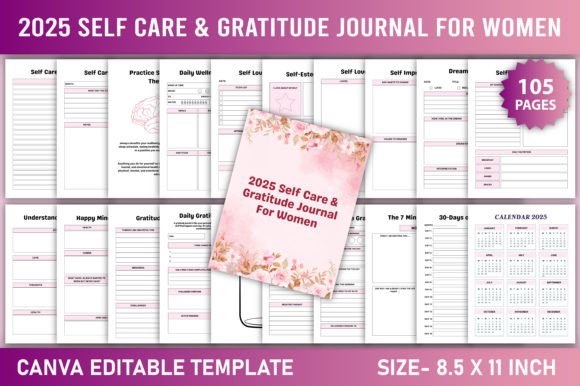
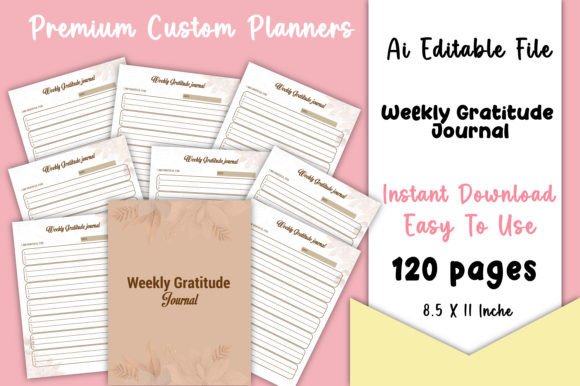
The Editable Weekly Gratitude Journal KDP is a pre-designed, digitally editable interior file intended for creators publishing physical gratitude journals through Amazon’s Kindle Direct Publishing (KDP) platform. It is formatted to KDP’s specifications: 8.5″ × 11″ trim size, 120 pages in PDF format, CMYK color mode, and no bleed area. The file is AI-editable—meaning users can open and customize it using compatible design software such as Adobe Illustrator or Affinity Designer—and has been tested to meet KDP’s upload and printing requirements.
This product is not a printed book, nor is it a subscription or app-based tool. It is a production-ready interior template designed to reduce the time and technical overhead involved in preparing a gratitude journal for print-on-demand distribution. Its primary audience includes self-publishing authors, small business owners, coaches, therapists, educators, and content creators who want to offer a structured, professionally formatted journal without building the layout from scratch.
Why Someone Might Consider This Template
Several practical needs drive interest in the Editable Weekly Gratitude Journal KDP. First, consistency matters: KDP requires precise formatting—including correct margins, font embedding, and color profiles—to avoid rejection or print quality issues. A KDP-tested file reduces the risk of delays during submission. Second, efficiency is valuable: designing 120 pages of prompts, headers, date fields, and reflection spaces manually takes significant time and design expertise. An editable template provides a functional foundation that can be adapted—not just copied—using familiar tools.
Third, customization remains possible. Unlike static PDFs locked to a single use case, this file supports edits to text, fonts, colors (within CMYK constraints), and layout elements—allowing creators to align the journal with their brand voice, audience preferences, or therapeutic framework. For example, a mindfulness coach might revise prompt wording to reflect specific values; an educator could add space for student reflections tied to curriculum goals.
Benefits and Realistic Expectations
Key benefits include time savings, reduced technical friction, and design flexibility within defined parameters. Because the file is CMYK and bleed-free, it avoids common KDP pitfalls like unintended cropping or color shifts during printing. Being “AI editable” also signals compatibility with vector-based workflows—important for maintaining sharp text and scalable graphics across page sizes.
However, expectations should be grounded. This is not a plug-and-play solution requiring zero effort. Users need access to and familiarity with vector editing software. Basic knowledge of layers, text editing, and PDF export settings is necessary to make meaningful changes. Those relying solely on Canva, Google Docs, or basic PDF editors will likely encounter limitations—especially when adjusting spacing, reflowing layouts, or managing color consistency.
Also, while the template is described as “KDP tested,” that refers to technical compliance—not market performance. Success still depends on cover design, title optimization, description clarity, category selection, and reader engagement strategies—all outside the scope of the interior file itself.
Situations Where It’s a Strong Fit
The Editable Weekly Gratitude Journal KDP is especially well-suited for creators who:
- Already use or plan to learn vector design tools (e.g., Illustrator, Affinity Designer);
- Want full control over wording, tone, and structure—but lack time or confidence to build a journal layout from scratch;
- Are launching multiple related journals (e.g., seasonal editions, themed versions) and benefit from a reusable base;
- Need predictable output for consistent branding across print and digital companion materials;
- Prefer working in CMYK from the start to ensure accurate color reproduction in print.
In these cases, the template serves as a reliable scaffold—not a constraint—supporting iterative development and professional presentation.
When Alternatives May Be More Appropriate
For users without design software access or experience, alternatives deserve consideration. Ready-to-upload KDP interiors built in Word or InDesign (with clear instructions) may offer lower entry barriers—even if less flexible long-term. Similarly, creators focused exclusively on digital delivery (e.g., Notion templates or printable PDFs for direct sales) won’t need KDP-specific formatting at all.
Those seeking highly interactive features—such as hyperlinked tables of contents, embedded audio prompts, or dynamic form fields—will find this static PDF format limiting. Likewise, if accessibility is a priority (e.g., screen-reader compatibility, adjustable font sizing), a fixed-layout PDF presents inherent challenges compared to reflowable EPUB or web-based tools.
Finally, creators aiming for minimalist, line-art-only designs—or those needing extensive illustration integration—should verify whether the template’s existing assets (if any) align with their aesthetic. Since the listing doesn’t specify included graphics beyond layout structure, assumptions about visual elements should be avoided.
Making a Practical Decision
To determine whether the Editable Weekly Gratitude Journal KDP aligns with your goals, ask three questions:
- What’s your primary output channel? If you’re committed to selling physical journals via KDP—and intend to manage formatting yourself—the template’s technical readiness adds tangible value.
- What tools and skills do you already have? If you regularly edit vector files and understand KDP’s margin and color requirements, customization will feel manageable. If not, factor in learning time or outsourcing costs before purchasing.
- How much variation do you realistically need? If your goal is to publish one standard gratitude journal with minor text tweaks, this template supports that efficiently. If you envision frequent structural overhauls—like changing weekly layouts per quarter or adding new prompt categories—you’ll want to assess whether the underlying file structure accommodates those changes without excessive rework.
Reviewing sample pages (if available), checking compatibility with your current software version, and confirming whether the file includes editable layers—not flattened artwork—can further clarify suitability. Also consider how the template fits into your broader workflow: Does it integrate with your cover design process? Can it be reused across future titles? These operational details often matter more than feature lists alone.
In summary, the Editable Weekly Gratitude Journal KDP is a purpose-built tool—not a universal solution. Its value emerges most clearly when matched to specific production needs, technical capacity, and publishing goals. Evaluating it alongside your actual resources and intended use case—not just its stated attributes—leads to more informed, sustainable decisions.