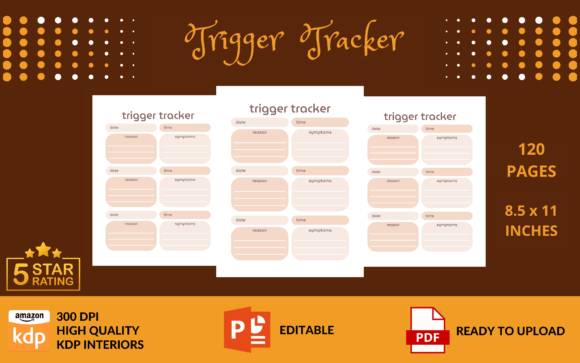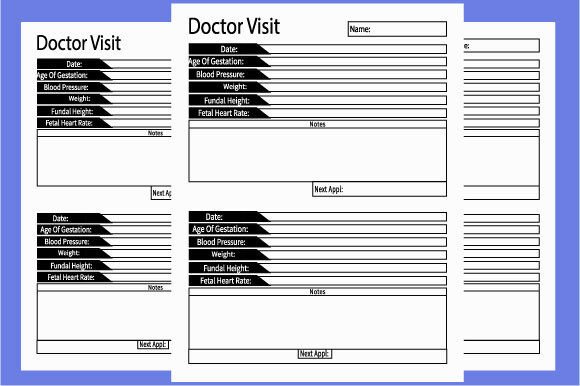
Trigger Tracker Journal - KDP Template
If you're building a low-content or no-content publishing business on Amazon KDP, time isn’t just money—it’s momentum. Every hour spent wrestling with layout, margins, bleed settings, or font hierarchy is an hour not spent scaling your catalog, refining your brand, or analyzing royalties. That’s why the Trigger Tracker Journal - KDP Template stands out: it’s not another generic notebook interior. It’s a purpose-built, print-ready design system engineered for clarity, consistency, and conversion.
A Journal That Works With Your Brain—Not Against It
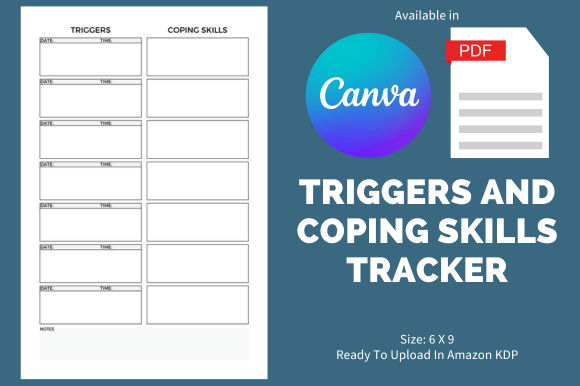
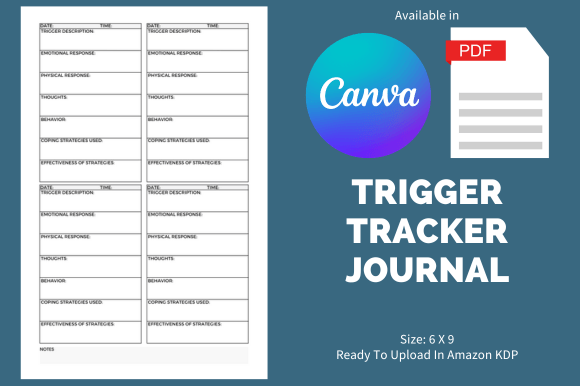
This isn’t decorative filler. The interior uses clean, intentional spacing, balanced line heights, and thoughtful visual rhythm to guide users through reflection without friction. You’ll notice subtle but effective cues: soft gray headers, generous margins (with full 6×9 bleed built in), and consistent typography that supports—not distracts from—the journaling process. The layout leans into modern editorial design principles: clear information architecture, predictable progression across pages, and breathing room where it matters most. There are no ornate borders or distracting graphics. Just structure that feels calm, capable, and quietly confident.
Designed for Real-World Publishing—Not Just Pretty Previews
We built this using Canva—not as a workaround, but as a strategic choice. Why? Because Canva gives you immediate control over color, spacing, headers, and even subtle typographic shifts—without needing InDesign expertise or hours of trial and error. The included editable Canva template link (delivered in PDF format) opens directly into a fully layered, labeled workspace. You can swap accent colors in under 30 seconds, adjust header weights, or reposition prompts—all while preserving KDP’s strict formatting requirements. No hidden layers. No broken links. No “just trust us” instructions.
The 110-page PDF is pre-optimized for Amazon’s upload system: CMYK-ready, 300 DPI, with bleed and crop marks precisely aligned. It’s not a “starting point”—it’s a launchpad. You’re not buying pixels; you’re buying hours saved, errors avoided, and confidence gained before your first upload.
Where This Design Fits—and Where It Doesn’t
This template shines in contexts where emotional resonance meets practical utility: habit tracking, trauma-informed journaling, CBT-based reflection, mindfulness practice, and behavioral coaching. Its tone is warm but grounded—neither clinical nor overly whimsical. That balance makes it ideal for creators targeting audiences who value authenticity over aesthetics alone: therapists building supplemental tools, wellness coaches launching digital products, or educators designing classroom reflection resources.
It’s less suited for high-energy branding (think festival merch or teen planners) or ultra-minimalist luxury niches where whitespace is used more sparingly. And while it adapts beautifully to personal use, its real strength lies in commercial scalability—especially when paired with cohesive cover design, targeted keywords, and audience-aligned descriptions.
Typography That Serves the Purpose—Not the Ego
The interior uses a carefully selected sans serif typeface: neutral enough to avoid personality clashes, legible at small sizes, and flexible across both print and screen previews. It’s not a “premium font” in the flashy sense—but it *is* a professional one. No script flourishes. No variable axes to manage. Just stable, readable letterforms that support long-form writing without fatigue.
That choice has tangible effects: stronger visual hierarchy (headers pop without shouting), improved readability for neurodiverse users, and faster scanning for readers skimming prompts. It also reinforces perceived professionalism—critical when your product sits alongside established publishers’ journals. Consistency here isn’t about style repetition; it’s about signaling reliability. When every page feels like part of the same thoughtful system, trust builds silently.
Customization Without Compromise
You don’t need design experience to make this yours—but you do need intention. Start by asking: *What emotion should someone feel opening this journal? Calm? Clarity? Courage?* Then test small changes against that goal. Swap the default charcoal header color for deep indigo if you want quiet authority—or warm terracotta if your brand leans into grounded energy. Adjust prompt spacing if your audience includes people with motor challenges or visual processing differences.
Font pairing? Keep it simple. If you add a secondary typeface (say, for section titles), choose one with similar x-height and open counters—like a gentle geometric sans or a restrained humanist sans. Avoid contrast for contrast’s sake. A bold weight shift within the same family often communicates more than switching fonts entirely.
And always test print proofs—not just on screen. What looks crisp at 100% zoom may blur slightly on matte paper. The included PDF is optimized, but your final output depends on how your chosen printer renders thin strokes and tight spacing.
Why This Changes the Royalty Curve
Most new KDP publishers underestimate how much time gets lost in the “last 10%”: adjusting margins, fixing bleed warnings, re-exporting for CMYK, second-guessing font sizes. That 10% adds up—fast. With the Trigger Tracker Journal - KDP Template, that friction disappears. You go from idea to upload in under an hour. That means more titles per month. More data points on what converts. More space to refine your positioning instead of debugging PDFs.
It also supports smarter iteration. Because the Canva file is editable, you can create variants—different prompt sets, alternate layouts for specific audiences, seasonal versions—without rebuilding from scratch each time. That agility compounds. One well-designed interior becomes the foundation for five, ten, twenty distinct listings—each with its own voice, but all rooted in the same reliable structure.
If you’ve ever paused mid-upload wondering, “Is this *really* good enough?”—this template answers that question before you ask it. It’s not magic. It’s method. And method, consistently applied, is how low-content businesses move beyond survival mode and into sustainable growth.
If you like our products, please follow our shop.